
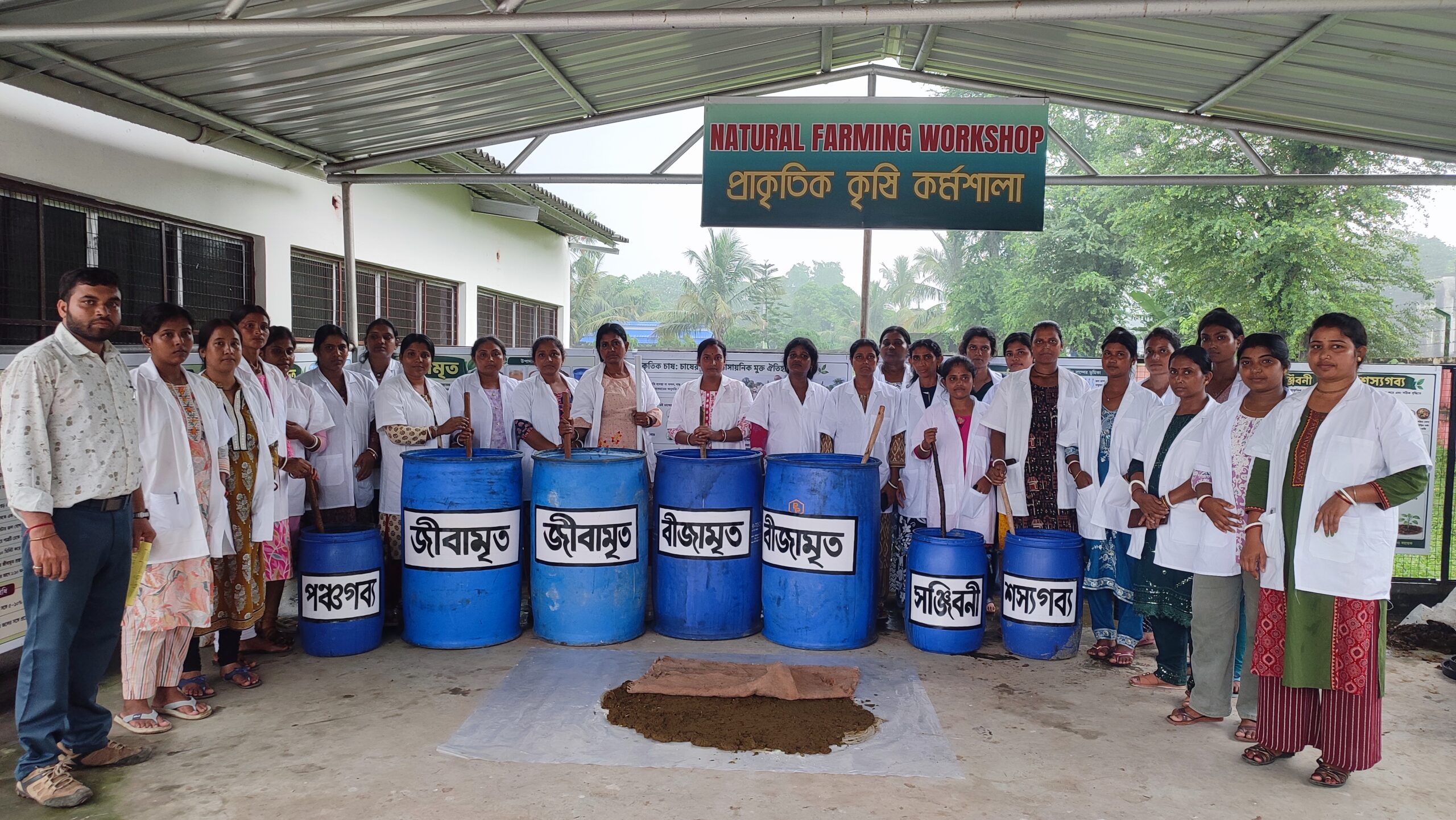
Hands-on Training Programme on Natural Farming under NMNF: Strengthening the Role of Krishi Sakhis in Extension Work
3–7 August 2026 | Nadia Krishi Vigyan Kendra
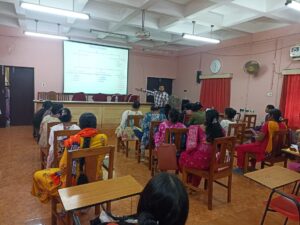
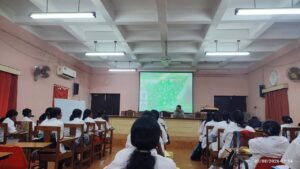
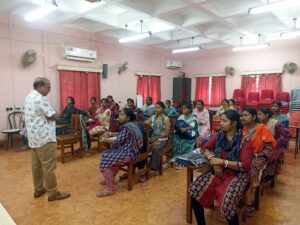
A five-day Hands-on Training Programme on Natural Farming under the National Mission on Natural Farming (NMNF): Role of Krishi Sakhi in Extension Work was conducted from 3 to 7 August 2026 at Nadia Krishi Vigyan Kendra, BCKV, Gayeshpur. The programme focused on strengthening the knowledge and practical skills of Krishi Sakhis so that they can effectively support farmers and rural communities in the adoption of natural farming practices.
The National Mission on Natural Farming (NMNF) is a Government of India initiative aimed at promoting natural farming as a sustainable, eco-friendly and low-input agricultural production system. The mission seeks to reduce farmers’ dependence on external chemical inputs, improve soil health, conserve natural resources, promote biodiversity, reduce the cost of cultivation and enhance the sustainability and resilience of farming systems.
Building Grassroots Extension Capacity
The training highlighted the significant role that Krishi Sakhis can play as grassroots-level agricultural extension workers and change agents. With their close connection to farming communities, Krishi Sakhis can help bridge the gap between farmers and agricultural institutions by disseminating appropriate technologies and creating awareness about the benefits of natural farming.
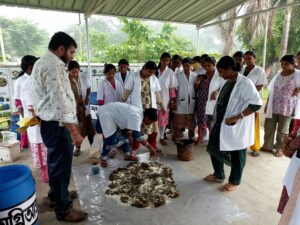
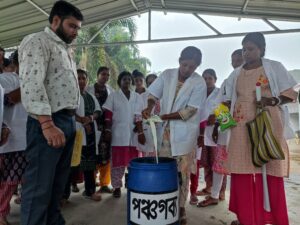
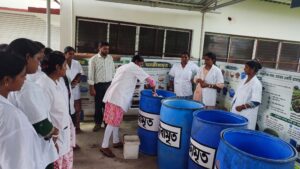
Participants were oriented towards the fundamental principles and practices of natural farming, including Beejamrit, Jeevamrit, Achhadana (mulching), Whapasa and minimal soil disturbance. Emphasis was also given to the preparation and use of locally available natural farming inputs such as Beejamrit, Jeevamrit, Ghanajeevamrit, Neemastra, Brahmastra, Agneyastra and Dashaparni Ark.
The hands-on approach of the programme was intended to enhance the confidence of Krishi Sakhis in explaining and demonstrating natural farming practices at the village and farm level.
 |
 |
 |
Krishi Sakhi as a Link between Farmers and Extension Agencies
Krishi Sakhis can serve as an important link between farmers, rural communities, Krishi Vigyan Kendras (KVKs), Agriculture Departments and other extension agencies. Their role can extend beyond awareness generation to supporting the organisation of farmer training programmes, demonstrations, field days, awareness campaigns and exposure visits.
They can also help identify farmers’ field-level problems, provide basic guidance on natural farming practices, facilitate access to technical support and government programmes, and communicate farmers’ experiences and feedback to the concerned extension agencies.
Such a grassroots extension mechanism can help ensure that scientific knowledge and practical technologies reach farmers in an accessible and locally relevant manner.
Promoting Opportunities for Rural Youth
An important component of the training was the role of Krishi Sakhis in encouraging rural youth to participate in natural farming and related entrepreneurial activities.
Natural farming can create opportunities not only in crop production but also in areas such as natural input preparation, bio-input production, nursery raising, vermicomposting, value addition, marketing and digital agricultural services. By creating awareness among rural youth about these opportunities, Krishi Sakhis can help promote entrepreneurship, self-employment and sustainable rural livelihoods.
Encouraging young people to engage in natural farming and allied enterprises can therefore contribute to both environmentally sustainable agriculture and rural employment generation.
 |
 |
 |
Towards Sustainable and Resilient Agriculture
The programme emphasised that successful adoption of natural farming requires continuous awareness, practical knowledge, field-level guidance and effective extension support. Krishi Sakhis, being closely connected with rural communities, are well positioned to facilitate this process.
Through awareness creation, technology dissemination, farmer support, community mobilisation and motivation of rural youth, Krishi Sakhis can contribute significantly to accelerating the adoption of natural farming practices.
The training programme concluded with an emphasis on strengthening the capacity of Krishi Sakhis as grassroots-level change agents under the National Mission on Natural Farming. Their active involvement can contribute to improved soil health, reduced cultivation costs, conservation of natural resources, sustainable agricultural production and inclusive rural development.
The programme thus marked an important step towards strengthening community-based extension services and promoting natural farming at the grassroots level under the National Mission on Natural Farming.